
Attorney-client privilege is one of the most important protections in the legal system. In simple terms, this privilege means the things you share privately with your attorney while seeking legal advice are usually kept confidential.
This rule is meant to encourage total honesty, so you feel comfortable telling your lawyer the complete truth, no matter how sensitive or difficult the facts may be.
What Attorney-Client Privilege Usually Protects
Attorney-client privilege in most situations is designed to protect the privacy of honest talks and written communications with your lawyer while you’re seeking legal help. While this privilege can be very strong, it isn’t all-encompassing.
Here’s what it generally covers:
Written Communications
Attorney-client privilege typically covers direct written correspondence between you and your lawyer as well. This can include emails back and forth, formal letters, secure online communications, and even text messages.
Private Legal Conversations
Information you confidentially share with your lawyer about your case or the lawsuit is generally protected under privilege. This includes advice and strategy regarding a settlement and trial. This legal rule allows you to get honest feedback and to share every detail with your attorney without worrying that your thoughts or comments will become public.
Initial Consultations
In many cases, privilege will still cover confidential communications you make during an initial meeting with a lawyer, even if you don’t end up retaining their services. This means you can speak freely at these consultations. However, because there are some narrow exceptions and case-specific factors, it’s best never to assume all initial talks are privileged.
What Attorney-Client Privilege Does Not Protect
A common misunderstanding is that once you have a lawyer involved, everything you say to them becomes protected. There are some common limits:
Facts Are Not Automatically Privileged
Simply telling your lawyer about facts surrounding your injury or accident doesn’t turn those facts into a secret. Information such as the details of how the accident happened, like whether it was a car accident or a slip and fall, names of the people and witnesses involved, medical bills, police reports, photos, and physical evidence can usually be discovered by the other side during a case, with or without your lawyer disclosing what you told them.
Conversations in Front of Other People
Privilege works only when the client takes reasonable steps to keep their talks with their lawyer private. If you discuss strategy or reveal legal advice in front of people not part of the representation, you’re usually forfeiting your right to privilege.
Third-party presence (unless that third person is an interpreter or otherwise playing a legally necessary role) generally breaks the attorney-client privilege.
Communications for Illegal or Fraudulent Purposes
Legal privilege does not shield discussions or messages specifically meant to further a crime or commit fraud. For example, you cannot tell your lawyer about something illegal you plan to do and expect it to stay private.
Understanding the basics of what is and isn’t privileged is helpful for you to understand before speaking with an attorney.
Why Attorney-Client Privilege Matters in a Personal Injury Case
Attorney-client privilege plays an essential role in personal injury cases because it allows for open communication and stronger legal representation. Here are several key reasons why this protection is so important:
- Honest and complete communication: Attorney-client privilege allows you to share all details of your case with your lawyer without fear that your statements will be disclosed. This ensures your attorney can give accurate advice based on the full picture—not just limited or incomplete information.
- Effective strategy development: When your lawyer has access to all relevant facts, including potential weaknesses, they can prepare for challenges from the opposing side. This helps them build a more effective legal strategy and avoid being caught off guard during your case.
- Protection of sensitive information: Personal injury cases often involve private details about your health, finances, and personal life. Privilege helps ensure that this sensitive information remains confidential throughout the legal process.
- Improved case preparation: With full transparency, your attorney can gather the right evidence, consult experts, and prepare arguments that align with the true facts of your case.
- Stronger attorney-client relationship: Trust is essential in any legal case. Knowing your conversations are protected allows you to build a more open and productive relationship with your lawyer.
Ultimately, attorney-client privilege strengthens your case by encouraging transparency, protecting your privacy, and allowing your lawyer to advocate for you as effectively as possible.
Contact Starks Byron, P.C. To Schedule a Free Consultation With a Kennesaw Personal Injury Attorney
Attorney-client privilege is a critical protection that allows you to speak openly with your lawyer and receive informed legal guidance in Kennesaw, Georgia. Understanding what this privilege covers—and its limitations—can help you avoid mistakes that could impact your case.
For more information, don’t hesitate to contact our team at Starks Byron, P.C. to schedule a free consultation in Kennesaw, GA today.
We proudly serve Cobb County and its surrounding areas:
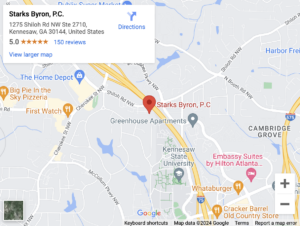
Starks Byron, P.C.
1275 Shiloh Rd NW Ste 2710, Kennesaw, GA 30144
(404) 795 5115